Preview every page
Read the document as you fill in the form.
Outline a proposed deal before a final agreement. Compare the filled example, check each detail and save your own copy.
These pictures show the same document generator with fictional example details.
Replace the example names and contact details in the form. Keep only information that belongs in this document.
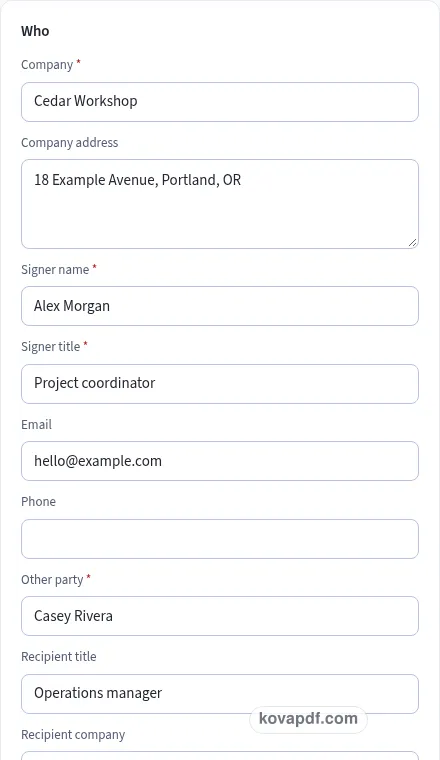
Check the page preview after changing the text. Read the amounts, dates and page breaks before exporting.
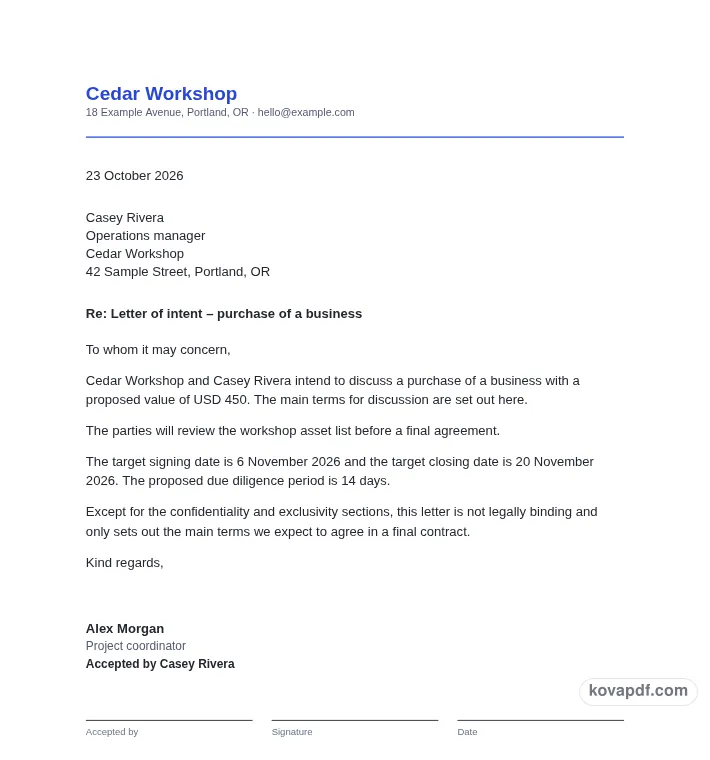
Use the download controls above the preview. Open the saved file and give it one final read before sharing.

Read the document as you fill in the form.
Compare Classic, Modern and Minimal layouts.
Save a copy when the names and figures are right.
The generator works on this device.
Use A4 or Letter and check the page breaks.
Return to the form to correct a detail before sharing.
These are fictional details. Choose an example, then replace them with your own.
Start with proposing business and other party. Replace the fictional sample with information from your own records.
Check proposed value beside due diligence. Read each page from the perspective of the other party considering the proposal.
Choose PDF or Word above the preview. Check acceptance and review in the saved copy before sharing it.
A professional letter of intent gives the other party considering the proposal a familiar structure to read. This Classic version is filled with a proposed purchase of workshop assets. Use it to outline a proposed deal before a final agreement, then replace the fictional details before sharing it. The style is a presentation choice. It does not verify the facts or change the meaning of the wording you enter.
For the letter of intent, start this part with proposing business. The example uses cedar Workshop. Identify who is making the proposal and the person signing for it. A business name alone does not establish that a signer has authority. Read this entry beside other party before you keep it. That comparison helps the other party considering the proposal understand the letter of intent without a separate explanation. The Classic layout gives the wording a clear place on the page, but the information still needs your attention.
For the letter of intent, start this part with other party. The example uses casey Rivera. Address the proposal to the person or business involved. Read the opening paragraph after changing the recipient so the proposed relationship is clear. Read this entry beside deal type before you keep it. That comparison helps the other party considering the proposal understand the letter of intent without a separate explanation. The Classic layout gives the wording a clear place on the page, but the information still needs your attention.
For the letter of intent, start this part with deal type. The example uses purchase of assets. Choose the description that matches the discussion. If the transaction does not fit the listed choices, use the custom description rather than a misleading label. Read this entry beside proposed value before you keep it. That comparison helps the other party considering the proposal understand the letter of intent without a separate explanation. The Classic layout gives the wording a clear place on the page, but the information still needs your attention.
For the letter of intent, start this part with proposed value. The example uses the figure being discussed. Make clear which price or value is proposed. The form does not decide which assets, assumptions or adjustments belong in that number. Read this entry beside target dates before you keep it. That comparison helps the other party considering the proposal understand the letter of intent without a separate explanation. The Classic layout gives the wording a clear place on the page, but the information still needs your attention.
For the letter of intent, start this part with target dates. The example uses proposed signing and closing dates. Review both milestones. A target date records an intention and should not be presented as a guaranteed completion date. Read this entry beside due diligence before you keep it. That comparison helps the other party considering the proposal understand the letter of intent without a separate explanation. The Classic layout gives the wording a clear place on the page, but the information still needs your attention.
For the letter of intent, start this part with due diligence. The example uses the period proposed for checking the deal. Write down a period the parties can discuss. Consider what information is needed rather than copying a sample number without context. Read this entry beside binding language before you keep it. That comparison helps the other party considering the proposal understand the letter of intent without a separate explanation. The Classic layout gives the wording a clear place on the page, but the information still needs your attention.
For the letter of intent, start this part with binding language. The example uses the non-binding statement and any exceptions. Read this wording closely, especially if confidentiality or exclusivity is included. A layout option does not settle the legal effect of the letter. Read this entry beside acceptance and review before you keep it. That comparison helps the other party considering the proposal understand the letter of intent without a separate explanation. The Classic layout gives the wording a clear place on the page, but the information still needs your attention.
For the letter of intent, start this part with acceptance and review. The example uses the recipient name and acknowledgment area. Treat the draft as a starting point for discussion. Have important terms checked before signing or relying on the document for a transaction. Read this entry beside proposing business before you keep it. That comparison helps the other party considering the proposal understand the letter of intent without a separate explanation. The Classic layout gives the wording a clear place on the page, but the information still needs your attention.
Before choosing a final file, compare the Classic heading with the first block of letter of intent details. Keep proposing business readable without enlarging the whole page. Then follow the document through target dates to the ending. On a printed copy, the reader has no form controls to reveal what an unclear entry was meant to say. Use A4 or Letter to match the paper you intend to use and read every page after switching. A longer letter of intent can flow onto another page. Keep the complete text when it is needed to explain a proposed purchase of workshop assets; a conventional appearance is not a reason to cut information the reader needs. Save the version you checked so later changes do not become confused with it.
Classic gives the letter of intent a conventional heading and clear divisions. Use it when the other party considering the proposal needs a familiar document to file or compare. Still read deal type and target dates before saving.
No. The appearance does not verify proposing business or settle questions about binding language. You supply the underlying facts and arrange any review needed for the situation.
Use the form to enter other party and then work through due diligence. The preview updates from your entries. All names and figures in the gallery are fictional and need checking before use.
PDF preserves the previewed page arrangement. Word provides editable text and may reflow when opened. Use the current draft to outline a proposed deal before a final agreement; whichever format you choose, inspect the saved copy before sharing it with the other party considering the proposal.
No. Download the checked copy, then choose how to share it. Your entries are used on this device. On a shared computer, clear the saved draft when you no longer want those details stored in the browser.